

Blog
Commercial Kitchen Ventilation Requirements
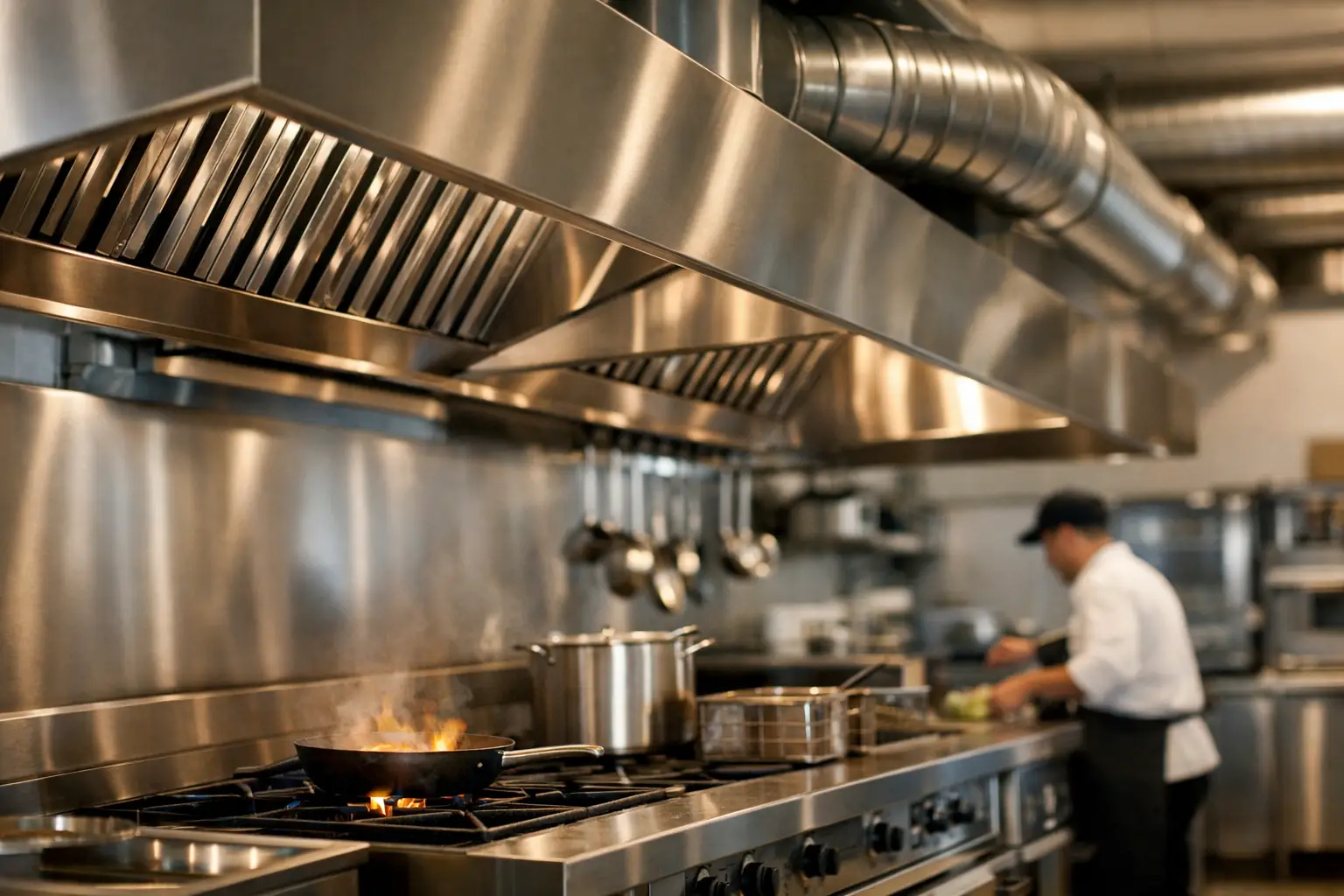
A busy kitchen tells you very quickly when the ventilation is wrong. Heat builds, grease settles where it should not, staff get uncomfortable, and the whole operation starts working harder than it needs to. That is why commercial kitchen ventilation requirements matter from day one – not just for compliance, but for fire safety, air quality, energy use and day-to-day performance.
For restaurant owners, facilities managers and contractors, the challenge is rarely just buying a hood and fitting a fan. A proper system has to match the cooking load, the shape of the room, the route of the ductwork and the practical realities of service access and cleaning. Get that right, and the kitchen runs cleaner, safer and more efficiently. Get it wrong, and problems show up fast.
What commercial kitchen ventilation requirements actually cover
When people talk about ventilation requirements, they often mean one thing – extraction. In reality, the requirement is broader. A commercial kitchen ventilation system has to remove heat, steam, grease, smoke and cooking odours while also maintaining enough replacement air for the space to work properly.
That means the canopy, extract fan, ducting, grease filtration and discharge arrangement all need to work as one system. It also means the incoming air matters just as much as the air being pulled out. If extraction is strong but replacement air is poor, the kitchen can end up under negative pressure, with doors hard to open, unstable cooking performance and uncomfortable draughts.
Requirements also vary depending on what the kitchen is doing. A site with light-duty cooking, such as reheating or simple prep, does not place the same demand on a system as a kitchen running fryers, chargrills and heavy petrol equipment all day. The right specification depends on the duty, not just the room size.
Why the canopy design matters more than most buyers expect
The canopy is not there to decorate the ceiling line. Its job is to capture contaminated air at source before it spreads into the room. That is why canopy size, shape and position are central to compliance and performance.
A canopy that is too small or set too high will struggle to contain the plume rising from cooking appliances. Once heat and grease bypass the hood, the fan has to work harder and the kitchen still feels uncomfortable. Proper overhang, correct mounting height and a layout that reflects the actual equipment line are basic but essential.
This is where bespoke fabrication often outperforms off-the-shelf thinking. Kitchens are rarely perfect rectangles with generous ceiling heights and easy duct routes. A custom-built stainless steel canopy can be designed around the exact cooking line, obstacles and extraction needs of the site, which gives you a better chance of capturing pollutants properly without wasting airflow.
Different cooking loads need different extraction performance
Not every commercial kitchen needs the same level of extraction. A prep kitchen with ovens and boiling equipment creates a different air profile from a fast-paced takeaway with deep fryers and solid fuel appliances. Grease-heavy cooking needs stronger capture and more effective grease management.
That affects the type of filters specified, the fan duty, duct sizing and cleaning access. It can also affect whether additional treatment, such as electrostatic filtration, is worth building into the design. In high-output kitchens, especially where odour and grease are a concern, it often is.
Ductwork, fans and discharge points are part of the requirement
A good canopy connected to poor ductwork will still underperform. Commercial kitchen ventilation requirements do not stop at the hood face. Air has to move through the system efficiently, safely and in a way that allows for cleaning and maintenance.
Duct runs should be practical, well-sized and routed to reduce unnecessary resistance. Long runs with too many bends increase pressure losses and make the fan work harder. Poor routing can also create grease build-up points, which is exactly what operators want to avoid.
Fan selection matters for the same reason. Oversized fans can create noise, energy waste and uncomfortable conditions. Undersized fans fail to clear the cooking effluent properly. The right fan is chosen against the actual duty of the system, not by guesswork.
Discharge location is another point that often gets left until late in a project, even though it can affect planning, neighbour impact and system performance. If the extracted air is discharged badly, odours can drift back into the building or create complaints outside. A proper design looks at the whole path of the air, from capture to safe discharge.
Grease control is not optional
In any kitchen producing grease-laden vapours, grease management is a core requirement. This is partly a cleanliness issue, but more importantly it is a fire and maintenance issue. Grease that is not captured early enough ends up in the ductwork, on surfaces and inside equipment, where it becomes more difficult and more expensive to manage.
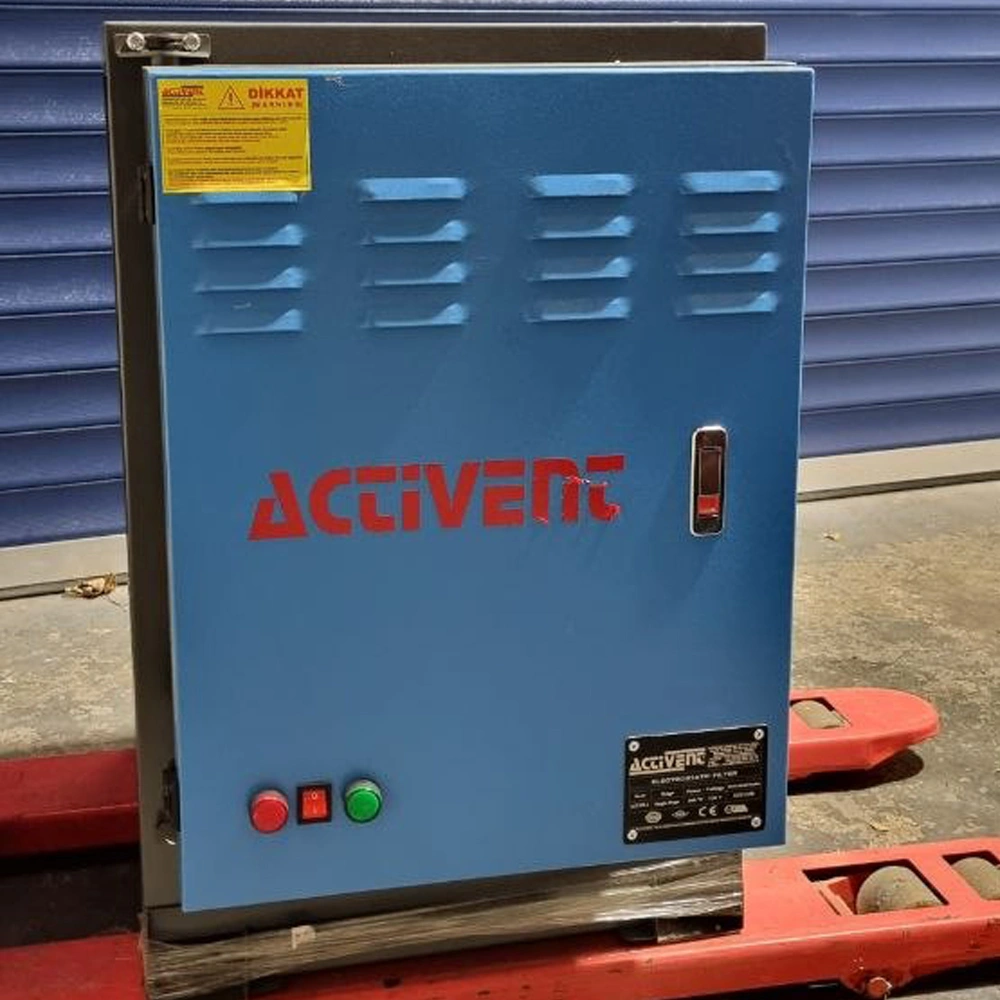
Primary filtration in the canopy helps remove grease at source. Beyond that, some kitchens benefit from more advanced treatment, particularly where there are high grease loads or sensitive discharge conditions. Electrostatic precipitator units can play an important role here by reducing fine grease particles before discharge.
There is a cost to adding better grease control, of course. But there is also a cost to not doing it – more frequent cleaning, greater fire risk, poorer air quality and a system that deteriorates faster than it should. In practice, quality filtration usually pays for itself through cleaner operation and fewer headaches.
Make-up air is where many systems fall short
Extraction gets the attention because it is visible in the specification. Make-up air often gets treated as an afterthought. That is a mistake.
When large volumes of air are extracted from a kitchen, that air has to be replaced. If it is not, the kitchen can experience pressure imbalance, poor capture performance and an uncomfortable working environment. Staff notice this quickly, especially in hot kitchens running long shifts.
Well-designed replacement air helps maintain stable conditions and supports the canopy’s ability to contain heat and fumes. The detail matters here. Supply air should not disrupt the cooking plume or create unpleasant draughts across workstations. It needs to be introduced in a controlled way that supports the extraction rather than fighting it.
Commercial kitchen ventilation requirements and compliance
Compliance is one of the main reasons buyers start researching ventilation, but it should not be the only one. A system can tick boxes on paper and still be awkward to clean, expensive to run or poorly matched to the kitchen.
That said, compliance does matter. Commercial kitchen ventilation requirements are tied to health and safety, fire prevention, hygiene and building performance. The exact requirements on a project can depend on the site type, cooking equipment, local authority expectations and the wider building design.
For that reason, proper survey and design work are worth doing early. It is far cheaper to resolve extraction routes, access panels, discharge points and canopy sizing at design stage than to fix them after installation. Trade buyers and contractors know this well – rushed decisions in ventilation usually become expensive ones.
Cleaning and maintenance should be designed in
A system that cannot be maintained properly is not a dependable system. Access for cleaning filters, servicing fans and inspecting duct sections should be built into the design from the start.
This is especially important in high-use kitchens, where grease loading is heavier and downtime has a direct commercial cost. Stainless steel construction, practical access points and sensible component placement all make a difference. Premium-quality fabrication is not just about appearance. It supports hygiene, durability and service life.
What buyers should look for before approving a system
The strongest ventilation projects start with the right questions. What equipment is actually being used? How many hours will it run? Where can the ductwork go without compromising performance? Is odour control needed? How will the system be cleaned? Can replacement air be introduced properly?
Those questions shape the specification more effectively than choosing products from a catalogue alone. Standard components have their place, but many commercial kitchens need at least some level of customisation to achieve reliable results.
That is where a full-service supplier has a clear advantage. Design, fabrication, installation and after-sales support all affect the outcome. If those stages are handled in isolation, details get missed. If they are handled together, the result is usually cleaner, faster and more dependable. For buyers who want fewer delays and fewer compromises, that joined-up approach makes commercial sense.
CanopyMan works in exactly that space – supplying premium-quality, fully customisable ventilation systems built for real operating environments, not just generic layouts on paper.
The best ventilation system is not always the biggest or the most complex. It is the one that fits the kitchen, controls heat and grease properly, remains serviceable over time and supports the people working beneath it every day. If you are planning a new kitchen or upgrading an underperforming one, start with the airflow, not after the complaints begin.
 Canopy
 Fans
Fans Stainless Steel Sheets
 ESP
ESP Cold room