

Blog
Commercial Cold Room Installation Done Right

A cold room that is the wrong size, poorly sited or badly fitted rarely fails in one dramatic moment. It chips away at margins every day through wasted energy, uneven temperatures, stock loss and avoidable call-outs. That is why commercial cold room installation needs to be treated as an operational decision, not just a building job.
For restaurants, food producers, florists, pharmacies and facilities teams, the pressure is the same – protect stock, maintain temperature control and keep the site moving. The room itself matters, but so does everything around it: layout, access, insulation, drainage, refrigeration load, door type and how staff actually use the space. When those details are handled properly from the start, the cold room becomes dependable plant equipment rather than a recurring problem.
What commercial cold room installation really involves
A proper installation is not simply a set of insulated panels dropped into an empty corner. It starts with understanding what the room must do every day. A busy kitchen taking multiple deliveries and opening the door constantly has different demands from a production facility storing palletised goods for longer periods. The same applies to chilled and frozen applications. The temperature target, product volume and traffic pattern all change the build.
The room envelope is only one part of the system. Refrigeration equipment, evaporators, condensers, controls, lighting, shelving allowances and airflow all need to work together. If one part is underspecified, the rest of the installation can still struggle. That is why a practical site survey matters. Ceiling height, floor condition, power supply, plant positioning and ventilation to the condensing unit all affect performance.
In many cases, the best answer is a custom-built room rather than an off-the-shelf size. Standard modules can work well on straightforward sites, but awkward footprints, restricted access and specific storage requirements often call for a made-to-measure approach. That usually delivers a better fit and a cleaner installation, even if the upfront cost is slightly higher.
Getting the specification right before installation
Most cold room problems begin before any panel is fixed in place. They start with assumptions. Estimated stock levels are too low, future growth is ignored, or the room is sized around available space rather than operational need. That may save money on day one, but it tends to create higher running costs and practical bottlenecks later.
A sensible specification begins with capacity. Not just cubic metres, but usable storage volume once shelving, access lanes and handling space are considered. A room packed too tightly restricts airflow and makes temperature consistency harder to maintain. A room built far larger than needed can also be inefficient if the refrigeration plant is not matched correctly.
Door choice is another point that deserves more attention than it often gets. Hinged doors may be fine for smaller chilled rooms with lower traffic. Sliding doors can be better where space is limited or access is frequent. Strip curtains, view panels and emergency release features may also be necessary depending on the environment and use. These are not extras for appearance. They affect safety, heat gain and day-to-day practicality.
Floor construction also depends on the application. Some installations work well with insulated floors built into the room. Others need the cold room set onto an existing slab, especially where pallet trucks or heavier loads are involved. Frozen rooms have further considerations, including floor insulation and frost heave protection. This is where experience counts, because the wrong floor detail can become an expensive issue once the room is in service.
Site conditions can make or break the project
Even a premium-quality cold room will underperform if the surrounding site works against it. Ambient heat, poor air circulation around the condensing unit, drainage issues or difficult delivery access can all complicate the job. Good installers plan around those realities instead of forcing a standard solution onto a non-standard space.
In commercial kitchens, cold rooms often sit near hot lines, wash areas or delivery routes. That creates competing demands. You want easy access for staff, but you also need to limit heat infiltration and avoid positioning plant where grease, steam or general congestion will shorten service life. In industrial settings, the challenge may be different. Forklift traffic, loading patterns and hygiene zoning may drive the design.
This is also where coordination with other building services matters. Electrical supply, isolators, drainage runs and ventilation provisions should be settled before installation day wherever possible. If they are left to be improvised on site, delays and compromises usually follow. Straightforward planning saves time and protects build quality.
Commercial cold room installation and energy performance
Running costs are now part of the buying decision. A cheaper room that leaks cold air, cycles heavily or forces the plant to work harder is rarely the cheaper option over time. Commercial cold room installation should therefore be judged on long-term efficiency as well as purchase price.
Panel thickness and insulation quality are obvious factors, but they are not the whole story. Door openings, traffic levels, control accuracy and plant sizing have just as much influence on energy use. If the evaporator layout creates poor air distribution, the system may overwork to hold set point. If the door is frequently left open, the refrigeration pack ends up carrying a problem caused by workflow, not by capacity.
There is always a balance to strike. Higher-specification components and smarter controls can reduce operating costs, but not every site needs the same level of investment. The right answer depends on utilisation, stock value and trading hours. A room protecting high-value or highly regulated goods justifies a tighter specification than a low-use ancillary store.
Compliance, safety and uptime
Cold rooms are working assets, so compliance is not separate from performance. Temperature integrity, safe access, emergency escape, hygienic surfaces and correct electrical installation all need to be covered. For food environments in particular, the finish must support cleaning routines and practical maintenance.
A good installation should also be easy to service. That means sensible plant access, clear control locations and enough thought given to maintenance from the start. Hiding key components in awkward spaces may look tidy on handover day, but it is not a smart long-term choice if every service visit becomes difficult.
Downtime is often the most expensive part of a poor installation. If a cold room is out of action, the direct repair cost may be minor compared with lost stock, disrupted service or failed audits. Reliability starts with build quality, but it also depends on proper commissioning. The system should be tested under realistic conditions, controls checked, temperatures verified and users shown how to operate it properly.
Choosing the right installation partner
Buyers usually compare quotations on visible numbers – room size, panel finish, condensing unit and lead time. That is sensible, but it is not enough. The better question is how the supplier approaches the full job. Do they survey properly, challenge weak assumptions and adapt the design to the site, or are they only selling a boxed specification?
A capable partner will talk clearly about load calculations, room usage, access restrictions and after-sales support. They will also be honest where trade-offs exist. For example, the fastest install may not be the most efficient arrangement for maintenance. The lowest upfront price may exclude details that later become variations. Straight answers at quotation stage usually lead to smoother delivery.
This is where a full-service manufacturer and installer has an advantage. When design, fabrication, installation and support are handled in one place, there is less room for miscommunication. Custom details are easier to deliver, accountability is clearer and the finished system tends to reflect the actual site requirement rather than a generic template. That practical control is one reason many commercial buyers prefer a specialist team such as CanopyMan when the project needs more than a standard off-the-shelf answer.
What a well-installed cold room looks like in practice
You can usually spot a sound installation by how little attention it demands once operational. Doors close properly, temperatures recover quickly after access, shelves fit the workflow, drainage behaves as expected and the plant runs without constant complaint. Staff use it naturally because the room suits the job.
That is the real benchmark. Not whether the room looked good on day one, but whether it keeps performing through busy periods, seasonal changes and daily wear. A commercial cold room is there to support operations quietly and consistently. If it is consuming management time, it has probably not been designed or installed well enough.
When you are planning a new room or replacing an unreliable one, the smartest move is to focus on the whole working environment, not just the cabinet price of the room itself. Build it around stock, traffic, energy use and service access, and you will get an asset that earns its keep for years. A cold room should protect your operation, not test it.
 Canopy
 Fans
Fans Stainless Steel Sheets
 ESP
ESP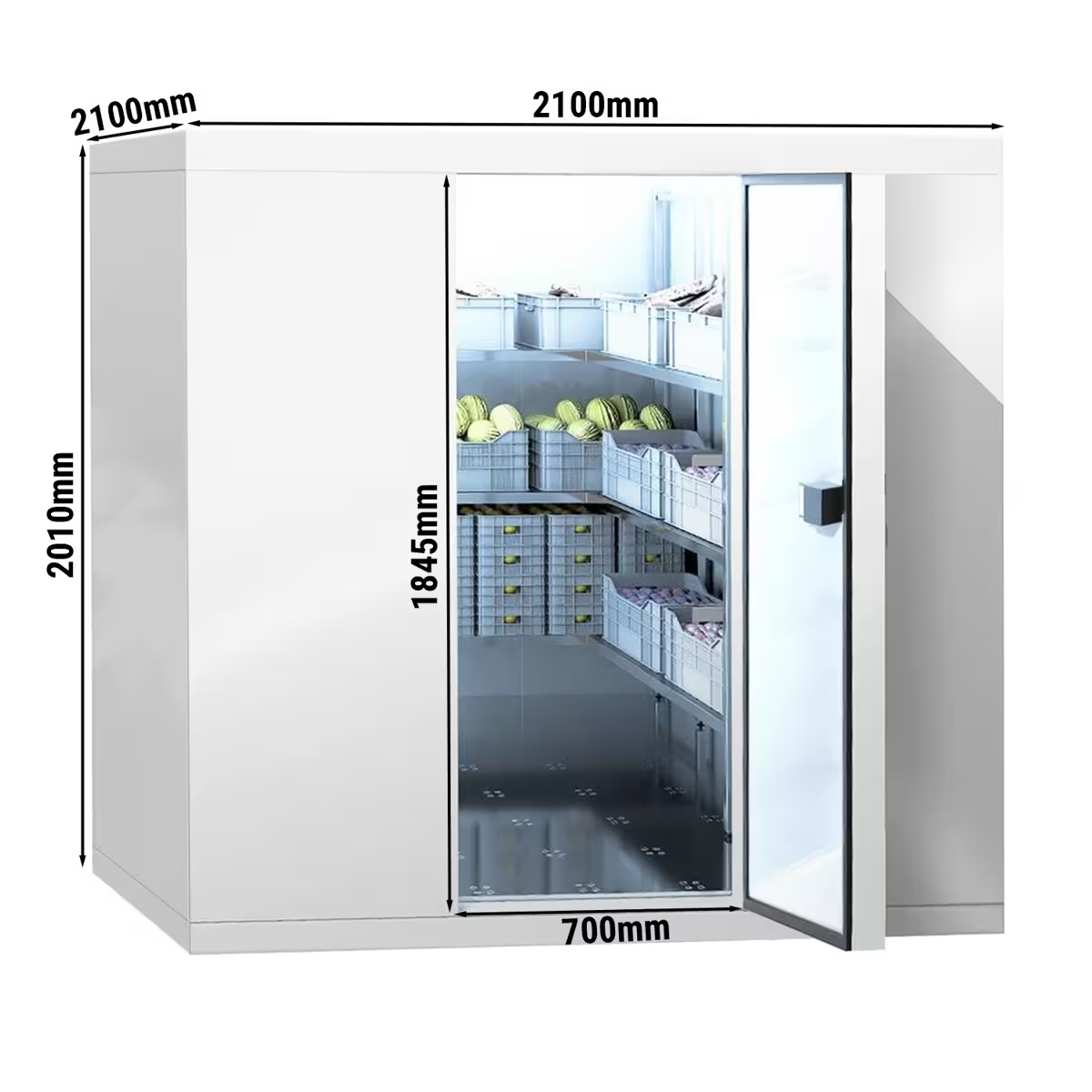 Cold room