

Blog
Commercial Cooking Ventilation Systems Explained

A busy kitchen tells you very quickly whether the extraction has been designed properly. If heat hangs in the room, grease settles on surfaces, or staff are working in smoke and odour, the problem is not the menu – it is the ventilation. Commercial cooking ventilation systems are not a finishing touch. They are a core part of kitchen performance, safety and compliance.
For restaurant owners, facilities managers and contractors, the right system does more than pull air out of a room. It protects staff comfort, supports food service, reduces grease build-up, and helps create a cleaner, safer working environment. It also needs to fit the site, the cooking line and the way the operation actually runs. That is where many projects go wrong. A standard approach in a non-standard kitchen usually creates expensive problems later.
What commercial cooking ventilation systems actually do
At a practical level, commercial cooking ventilation systems are built to capture and remove heat, steam, grease-laden air, smoke and cooking odours from the source. In most kitchens, that starts with a correctly sized extraction canopy positioned over the cooking equipment. From there, air moves through ductwork, filtration and fan systems before discharge.
That sounds straightforward, but performance depends on the detail. A canopy that is too small will fail to capture contaminated air effectively. Duct runs with poor routing can reduce airflow. Fan selection matters, and so does the balance between extract air and replacement air. If you remove large volumes of air without managing make-up air, the kitchen can become uncomfortable and inefficient very quickly.
This is why ventilation design should never be treated as a bolt-on purchase. The system has to work as a complete package, not as a collection of separate parts.
Why kitchen extraction design matters
A commercial kitchen produces a demanding mix of airborne contaminants. Petrol appliances create combustion products. Fryers release grease particles. Dishwashing areas generate moisture and heat. Chargrills can produce heavy smoke loads that require more intensive filtration and extraction than a light-duty cooking line.
The ventilation system must match that load. A small café serving pastries and light breakfasts will not need the same specification as a high-output takeaway or a large production kitchen. This is one of the biggest trade-offs in system design. Overspecifying can increase capital cost and energy use. Underspecifying can create compliance issues, poor working conditions and costly alterations after installation.
Good design starts with understanding the cooking process, appliance arrangement, service volume and building layout. Ceiling height, duct route options, discharge position and neighbouring properties can all affect what is practical. If the site has limited space or structural restrictions, custom fabrication often becomes the sensible route rather than trying to force standard equipment into an awkward footprint.
The key parts of commercial cooking ventilation systems
The canopy is the visible part, but it is only one element of the system. Its job is to capture contaminated air efficiently at source. The shape, dimensions and overhang all affect capture performance, especially where heat and smoke output is high.
Filtration is equally important. Grease filters help prevent heavier particles from entering the ductwork, reducing build-up and supporting cleaner operation. In more demanding applications, additional filtration such as electrostatic precipitator units may be needed to deal with finer grease and smoke particles. That becomes particularly relevant in urban sites, high-volume operations or locations where odour and emissions are under closer scrutiny.
Ductwork then carries extracted air through the building. This is where build quality matters. Poorly fabricated ducting, weak joints or unsuitable materials can compromise hygiene, airflow and lifespan. Stainless steel remains a strong choice in kitchen environments because it offers durability, ease of cleaning and resistance to demanding conditions.
The fan provides the pull behind the system. If it is incorrectly selected, the whole setup suffers. Too weak and extraction performance drops. Too powerful and you may create noise, imbalance and wasted energy. Controls also matter more than many buyers expect. A properly controlled system can improve efficiency, reduce unnecessary fan run time and support more consistent day-to-day performance.
Compliance is only part of the picture
Most buyers rightly focus on regulations and fire risk, but compliance should be treated as the baseline, not the finish line. A system can meet minimum requirements and still be awkward to maintain, expensive to run or poorly suited to the kitchen.
The better approach is to look at compliance alongside usability, durability and service access. Can filters be removed and cleaned easily? Is the duct route sensible for maintenance? Has grease management been considered properly? These details affect long-term running costs just as much as the initial specification.
For contractors and facilities teams, this is where working with a manufacturer that understands both fabrication and installation makes a difference. A good design on paper still has to work on site, around existing services, structural limitations and programme deadlines.
Custom or off-the-shelf?
There is a place for standard ventilation products, especially where kitchen layouts are simple and equipment sizes are predictable. They can help keep projects moving and make budgeting more straightforward. But many commercial kitchens are anything but standard.
Refurbishments often involve tight ceiling voids, awkward wall positions or existing duct routes that need to be reused or adapted. Open-plan kitchen concepts may need a cleaner visual finish. Industrial food spaces may require heavier-duty extraction and specialist filtration. In these cases, custom-built commercial cooking ventilation systems are usually the better investment because they solve the actual site constraints instead of creating workarounds.
That does not always mean more complexity for the buyer. In practice, a supplier that can design, manufacture and install as one package often reduces delays and avoids the usual back-and-forth between trades. It also gives you clearer accountability if adjustments are needed.
Energy efficiency without compromising extraction
Energy efficiency matters, but it should never come at the expense of proper air movement. A kitchen that looks efficient on paper but leaves staff working in excessive heat is not efficient in any meaningful sense.
The aim is to achieve the right airflow with the right equipment, not simply to reduce extraction rates. Efficient fan selection, sensible duct design and better system control all help. So does matching the canopy and filtration setup to the cooking process. When each part of the system is designed properly, you avoid forcing the fan to work harder than necessary.
Replacement air is another part of the conversation. Extracting air without planning how fresh air re-enters the space can create draughts, pressure issues and discomfort around doors or service areas. Balanced design improves staff comfort and can support more stable kitchen conditions throughout service.
What buyers should look for from a supplier
When specifying commercial cooking ventilation systems, buyers should look beyond product dimensions and price lists. Manufacturing quality, material grade and site understanding matter. A well-built stainless steel canopy fabricated accurately will generally outperform and outlast a cheaper alternative built to a lower standard.
You also want a supplier that asks practical questions. What cooking equipment is being used? What is the output level? Where will the discharge go? Is odour control required? How will access for cleaning be managed? Those questions are not sales talk. They are the difference between a system that works and one that needs fixing six months later.
CanopyMan’s approach reflects that hands-on reality. Custom fabrication, dependable installation support and durable stainless steel construction are not extras in this sector – they are what serious buyers need if they want the system to perform under pressure.
Installation problems that are easier to prevent than fix
Many ventilation issues are not caused by poor components. They come from rushed coordination. Duct runs clash with structural beams, access panels are forgotten, or the canopy position changes after equipment layout has already been signed off. Once ceilings are closed and services are installed, every change becomes more expensive.
That is why early planning matters. Ventilation should be coordinated with kitchen design, electrical works, petrol services and building layout from the outset. Even small decisions, such as canopy height or fan position, can affect cleaning access, noise levels and installation time.
For principal contractors and fit-out teams, reliable lead times are also critical. Delays in fabricated ductwork or canopies can hold up multiple trades. Working with a supplier that controls its own manufacturing usually gives better programme confidence than relying on stock assumptions and outsourced fabrication.
A system should support the way your kitchen works
The best ventilation system is not the one with the longest specification sheet. It is the one that suits the cooking load, fits the site properly, remains serviceable over time and keeps the kitchen working cleanly and efficiently during the busiest part of the day.
That means looking at ventilation as operational equipment, not just building infrastructure. If the kitchen is central to your business, the extraction system deserves the same level of attention as the cooking line itself. Get that right at the start, and the whole environment works harder for you.
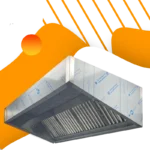 Canopy
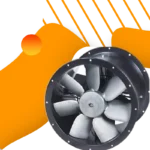 Fans
Fans Stainless Steel Sheets
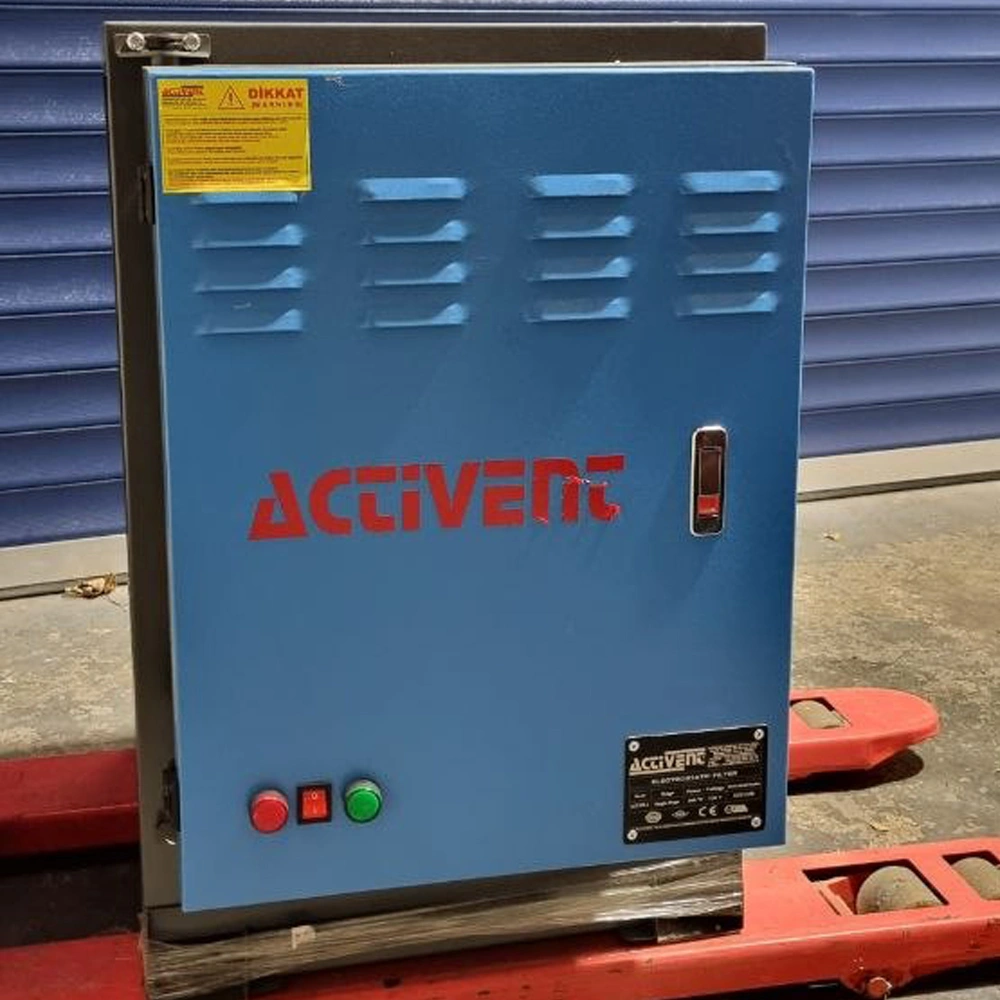 ESP
ESP Cold room