

Blog
Electrostatic Precipitator for Kitchen Exhaust

When a kitchen extraction system starts leaving grease on ductwork, staining nearby surfaces, or drawing complaints about smoke and odour, the problem is rarely the canopy alone. In many commercial sites, the real upgrade is an electrostatic precipitator for kitchen exhaust – a proven way to remove fine grease particles and smoke before they become a maintenance, compliance, or neighbour issue.
For restaurant owners, facilities managers, and contractors, that matters because fine airborne grease is where standard filtration starts to struggle. Baffle filters do a solid job on larger grease particles at canopy level, but smaller particles can travel deeper into the duct run, load up fans, and increase cleaning frequency. In high-output kitchens, especially those using solid fuel, chargrills, wok burners, or heavy frying, that build-up becomes expensive quite quickly.
What an electrostatic precipitator for kitchen exhaust actually does
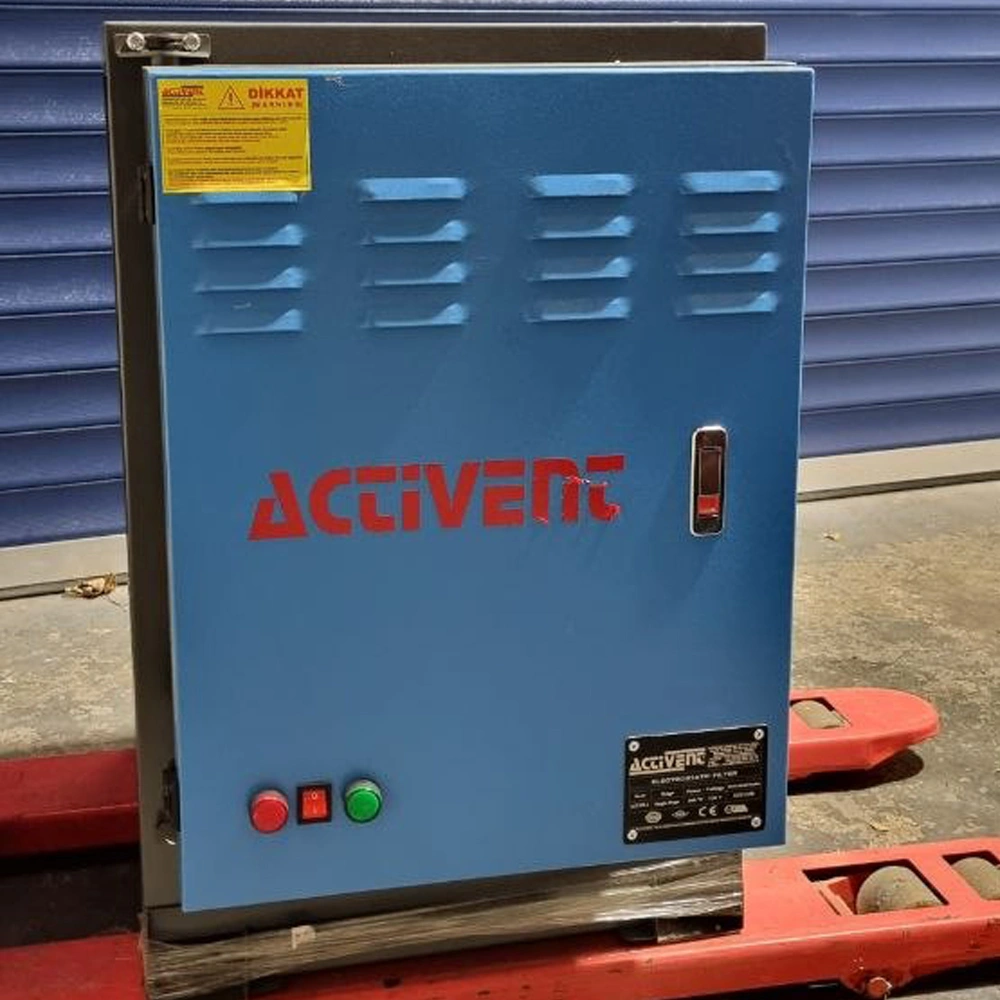
An electrostatic precipitator, often shortened to ESP, is designed to capture the fine particles that mechanical filters miss. As kitchen exhaust air passes through the unit, particles are electrically charged and then collected on oppositely charged plates. The result is cleaner air leaving the system and significantly less grease travelling downstream.
This is not just a technical add-on for specialist projects. In the right setting, it is a practical piece of equipment that protects the wider extraction system. Cleaner ductwork means less contamination inside the run, less grease reaching the fan, and fewer issues with discharge at roof level or external walls.
That said, an ESP is not a replacement for proper canopy design, suitable duct sizing, and effective primary filtration. It works best as part of a well-planned extraction package. If the airflow is wrong, the hood coverage is poor, or the system is undersized, an ESP will help with particle removal, but it will not correct the fundamentals.
Where ESP filtration makes the biggest difference
Not every kitchen needs the same level of air treatment. A light-duty prep kitchen has very different extraction demands from a busy takeaway, hotel kitchen, or production catering environment. The strongest case for ESP filtration usually appears where grease loading is high, discharge points are sensitive, or maintenance access is difficult.
This often includes sites with chargrilling, high-volume frying, or long duct runs. It is also useful in buildings where the kitchen sits close to offices, residential properties, or customer-facing entrances. In those cases, cleaner exhaust is not just about housekeeping. It helps protect the business from complaints, disruption, and expensive remedial work later on.
There is also a fire risk angle. Grease accumulation inside extraction systems is a known hazard. While no filtration method removes risk entirely, reducing the amount of grease entering the duct network is a sensible control measure. For many operators, that alone shifts an ESP from optional to worthwhile.
The operational benefits beyond cleaner air
The most obvious benefit of an electrostatic precipitator for kitchen exhaust is improved grease and smoke removal. The less obvious benefit is what that does for the rest of the system over time.
Fans and ductwork stay cleaner for longer. That can reduce the frequency and intensity of system cleaning, particularly in demanding kitchens. Access panels are still required, and cleaning schedules still matter, but the level of contamination can be far more manageable.
It can also support better presentation around the building. If discharge points are leaving marks on cladding, roofing, or nearby structures, fine grease is usually the culprit. Capturing more of it before discharge helps keep the premises cleaner and reduces visible fallout.
Odour control is slightly more nuanced. An ESP is highly effective on grease and smoke particles, but odour molecules may need additional treatment depending on the cooking process and site conditions. In some projects, carbon filtration or another secondary stage is still advisable. This is one of those areas where a blanket promise is not helpful. If the kitchen produces heavy odours, the right answer often depends on the menu, the extraction route, and what sits around the building.
What to look for when specifying an ESP unit
Build quality matters. In commercial extraction, equipment is expected to cope with heat, grease, cleaning regimes, and long operating hours. A poorly built unit can create more maintenance headaches than it solves. Stainless steel construction, dependable internal components, and access for servicing are all worth paying attention to.
You also need the unit sized correctly for the airflow. Too small, and it will struggle to treat the extract effectively. Too large, and you may be paying for capacity the site does not need. Proper specification should consider the cooking load, extract volume, duct layout, and how the system will be maintained in practice.
Ease of cleaning is another major factor. ESP cells require regular cleaning to maintain performance. If the unit is difficult to access, awkward to remove, or unrealistic for the kitchen team to manage, performance can fall off quickly. Good design is not just about peak efficiency on day one. It is about keeping the unit working properly month after month.
For that reason, bespoke solutions often make more sense than trying to force a standard box into a difficult plant layout. This is where a manufacturer-led approach can save time. A custom-built extraction package can account for site restrictions, required access zones, and the realities of installation, rather than treating the ESP as an afterthought.
Common mistakes that cause poor results
The biggest mistake is treating the ESP as a fix-all. If the canopy is the wrong size, capture is weak, or the fan is badly matched, the extraction system will underperform before the air ever reaches the ESP. Good filtration starts with good system design.
The second mistake is underestimating maintenance. Electrostatic precipitators are highly effective, but they are not fit-and-forget equipment. If the collection plates and cells are not cleaned at the correct intervals, efficiency drops. A realistic servicing plan is part of the specification, not an optional extra.
The third is ignoring the full discharge strategy. In some kitchens, grease removal is the main challenge. In others, smoke visibility or odour sensitivity may drive the design. If a site sits close to neighbouring properties, schools, or shared service yards, it is worth addressing all likely concerns at the outset rather than reacting after complaints begin.
Is an electrostatic precipitator worth the investment?
For many commercial kitchens, yes – especially where cooking volume is high and the extraction system has to work hard every day. The value is usually seen in lower contamination levels, cleaner ductwork, reduced grease spread, and a more controlled discharge.
The payback is not always measured in one simple figure. Sometimes it is fewer deep cleans. Sometimes it is avoiding visible staining on the building. Sometimes it is reducing nuisance issues that put pressure on the operation. For busy kitchens, those practical gains add up.
Still, there are trade-offs. ESP units add capital cost, need power, and require regular cleaning. If a site has light cooking demand and a straightforward extraction route, a simpler system may be enough. The right answer depends on the duty level, the building, and how much risk the operator wants to remove from the system.
Choosing a system partner, not just a product
An ESP performs best when it is part of a properly engineered extraction solution. That means looking beyond the unit itself and considering canopy design, ductwork, fan selection, access, control gear, and after-sales support. Buying a product is one thing. Getting a system that fits the site and performs under pressure is another.
For contractors and operators, this is why manufacturing capability matters. A supplier that can design, fabricate, install, and support the full system is in a stronger position to solve site-specific problems properly. That is particularly useful on refurbishment projects, awkward service routes, or kitchens where space is tight and standard dimensions do not fit cleanly.
At CanopyMan, that practical approach sits at the centre of the work. The goal is not to oversell equipment that a site does not need. It is to build extraction systems that suit the cooking load, the building, and the day-to-day demands of the customer.
If your current extract system is struggling with grease, smoke, or discharge issues, an ESP is worth serious consideration. The right setup can make the whole system cleaner, safer, and easier to manage – and that tends to pay for itself in fewer problems, not just cleaner air.
 Canopy
 Fans
Fans Stainless Steel Sheets
 ESP
ESP Cold room