

Blog
Industrial Canopy Design That Works Harder
When an extraction system underperforms, the problem often starts long before installation. Industrial canopy design decides how effectively heat, grease, smoke, steam and airborne contaminants are captured at source, and small design mistakes can turn into bigger problems once the site is live – poor air quality, rising energy costs, difficult cleaning routines and failed compliance checks.
For commercial kitchens, factories and workshops, that is not a minor detail. The canopy is not just a metal cover above a process line or cooking range. It is a working part of the ventilation system, and it needs to be designed around the equipment, the room, the duty cycle and the extraction route. Get that right and the whole system performs better. Get it wrong and even a powerful fan will struggle to compensate.
What good industrial canopy design actually does
A well-built canopy captures contaminated air where it is created and moves it out of the working environment with as little wasted energy as possible. That sounds simple, but performance depends on proportions, placement, airflow balance and build quality.
In a busy kitchen, the canopy needs to deal with rising heat, grease-laden vapour and combustion products without creating uncomfortable drafts for staff. In a workshop, it may need to capture fumes, dust or process emissions from a fixed work area. In both cases, the canopy has to suit the task rather than follow a one-size-fits-all pattern.
That is why practical design matters more than headline extraction figures. A large fan connected to a poorly sized hood can still leave contaminants escaping into the room. By contrast, a canopy that is properly dimensioned and positioned will usually deliver better capture with less wasted power.
The first design decision is the application
Industrial canopy design should always begin with the process underneath it. Different environments create different air movement patterns, contaminant loads and cleaning demands.
Commercial cooking equipment produces buoyant plumes of hot air mixed with grease and moisture. That calls for a canopy shape and filter arrangement that can intercept the plume efficiently and stand up to regular washdown. A fabrication bay or light industrial process may need localised capture over machinery, benches or enclosed operations, where the challenge is controlling fine particulates or fumes rather than grease.
This is where many buyers save time by working with a manufacturer that can design and build to suit the exact equipment layout. Standard sizes are useful in straightforward settings, but once you are dealing with unusual appliance lines, restricted ceiling heights, awkward duct routes or heavy-duty extraction demands, custom sizing becomes the safer option.
Sizing the canopy properly
A canopy should provide enough coverage to capture the rising air stream before it spreads into the room. In practical terms, that usually means giving careful attention to both plan size and overhang.
If the canopy is too small, contaminants escape at the edges. If it is oversized without a matching airflow strategy, you may end up extracting more air than necessary and pushing up running costs. The right balance depends on the equipment below, mounting height and the level of heat or pollutant generation.
Mounting height is often underestimated. Set the canopy too high and the plume can disperse before it reaches the hood. Set it too low and it may obstruct operations, cleaning access or maintenance. Good design finds the point where capture remains strong without getting in the way of staff or workflow.
In real sites, compromises are common. Steel beams, lighting, services and ceiling limitations can all affect final positioning. That does not mean accepting poor performance. It means designing around site conditions with realistic airflow calculations and fabrication that fits properly first time.
Airflow is not just about extraction rate
One of the biggest misconceptions in industrial canopy design is that more extraction always means better results. In practice, poor airflow balance can create as many problems as low airflow.
An effective canopy works as part of a full system. Extraction rate must suit the canopy dimensions and the contamination load, but replacement air also matters. If too much air is removed without adequate make-up air, the space can become negatively pressurised. Doors become harder to open, conditioned air is lost and the canopy may perform inconsistently.
On the other hand, badly placed supply air can disrupt the contaminated plume and push smoke or vapour away from the capture zone. That is why canopy design cannot be separated from ductwork, fan selection and room air movement. The hood is the visible part, but the system succeeds or fails as a whole.
For high-demand sites, energy efficiency should be part of this conversation from the start. A properly engineered canopy and duct layout can reduce wasted fan power, improve capture efficiency and lower the load on heating or cooling systems. Over time, that matters far more than shaving a small amount off the upfront purchase price.
Material choice affects lifespan and hygiene
Industrial environments are hard on equipment. Heat, grease, moisture, cleaning chemicals and continuous use will expose weaknesses quickly, especially in lower-grade fabricated products.
Stainless steel remains the preferred material for many canopies because it offers strength, corrosion resistance and a professional finish that stands up to demanding conditions. It also supports hygiene standards in food environments where cleanability is critical. Smooth fabrication, properly finished joints and sensible access for cleaning all make a difference to day-to-day use.
This is not just about appearance. Poor fabrication can create dirt traps, weak points and maintenance issues that show up later as downtime or premature replacement. A canopy is expected to work hard every day, so workmanship matters as much as the specification on paper.
Filtration, access and maintenance should be designed in
A canopy that captures contaminants effectively still needs to be serviceable. Grease filters, access panels, drain points and removable components should be built into the design rather than treated as extras.
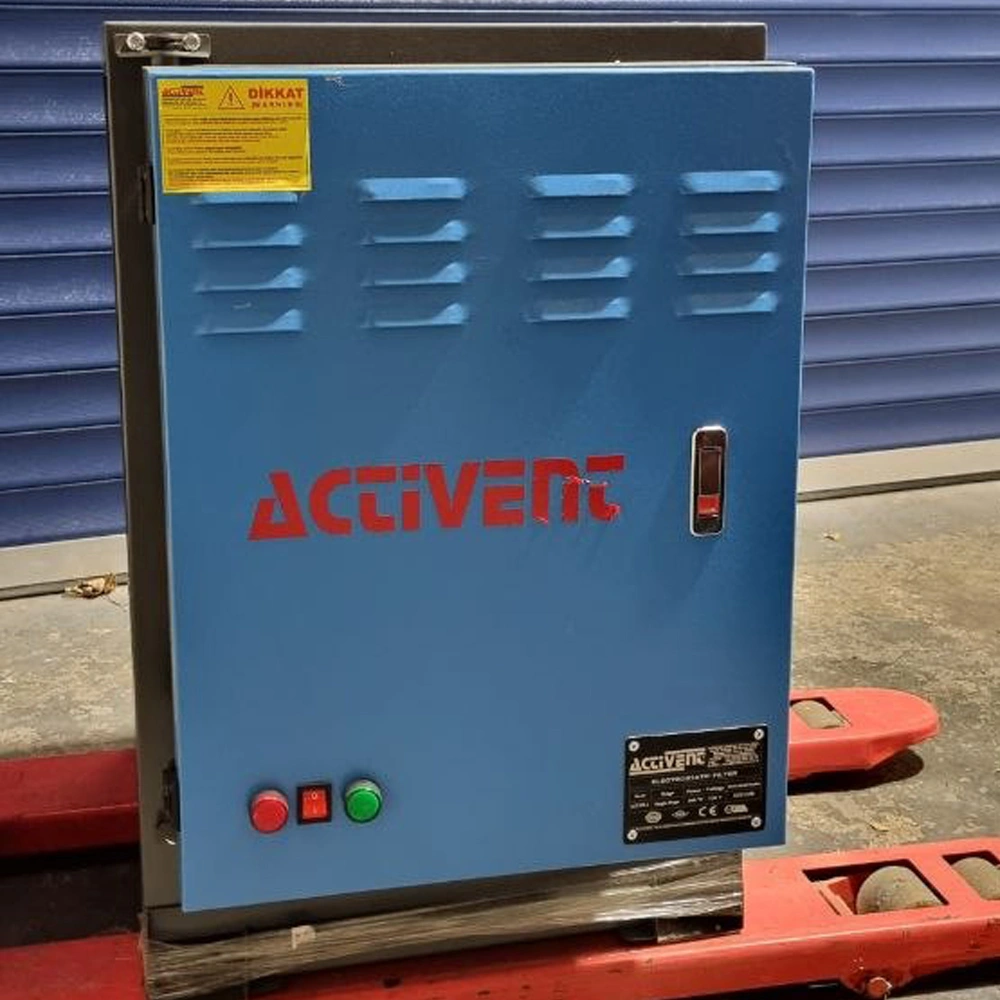
In kitchen settings, baffle filters are commonly used to separate grease before it enters the duct system. Their arrangement affects both extraction performance and cleaning efficiency. In more specialised systems, extra filtration or ESP units may be needed where grease control, smoke reduction or discharge quality are key concerns.
Maintenance access is where practical design shows its value. If filters are awkward to remove or access points are badly located, routine cleaning becomes slower and less likely to be done properly. That can shorten equipment life and raise fire risk. Buyers who think beyond the install date usually make better long-term decisions.
Compliance cannot be bolted on later
In the UK, extraction and ventilation systems often need to satisfy more than one requirement – health and safety, hygiene, fire risk management and, depending on the application, local environmental expectations. Industrial canopy design plays directly into that.
A poorly designed hood can make it harder to meet acceptable air quality standards, cleaning schedules and safe working conditions. It may also create noise issues or interfere with adjacent equipment. Compliance is rarely about a single component, but the canopy sits at the front end of the system and influences everything behind it.
That is why site surveys and proper design discussions matter. Off-the-shelf products have a place, especially for standard layouts, but projects with complex operational demands need more than a catalogue choice. They need measured design, sensible fabrication and installation support that reflects how the site actually works.
Custom design usually pays for itself
There is a clear commercial case for bespoke canopies when the process is demanding or the room layout is awkward. A custom-built solution can improve capture, reduce wasted air movement, fit available space more precisely and cut down on installation complications.
It can also simplify procurement. Instead of piecing together equipment from multiple suppliers, buyers can work with one partner that handles design, manufacture and installation. That reduces the risk of mismatched specifications and last-minute site changes.
For operators planning new premises, refits or plant upgrades, this joined-up approach usually leads to a cleaner result. It also means accountability is clearer if adjustments are needed once the system is commissioned. That is one reason many trade buyers and facilities teams prefer dealing with experienced manufacturers such as CanopyMan when performance and fit are non-negotiable.
What buyers should ask before approving a canopy
Before signing off any system, it is worth asking a few direct questions. Is the canopy sized around the actual equipment and duty level? Has airflow been considered alongside replacement air? Will filters and internal areas be easy to clean? Is the material grade suitable for the environment? And has the duct route been planned to support the canopy rather than work against it?
Straight answers to those points tell you a lot about the quality of the design process. If the discussion stays focused only on canopy width and fan power, there is a good chance important details are being missed.
The best industrial canopy design is not the one with the most features or the biggest extraction figure. It is the one that suits the site, captures contaminants reliably and keeps working without creating avoidable costs. If you are investing in ventilation equipment, that is the standard worth insisting on.
A canopy should earn its place every day – by keeping air cleaner, operations safer and maintenance simpler long after the installation team has left site.
 Canopy
 Fans
Fans Stainless Steel Sheets
 ESP
ESP Cold room