

Blog
Is Kitchen Ventilation Required in the UK?
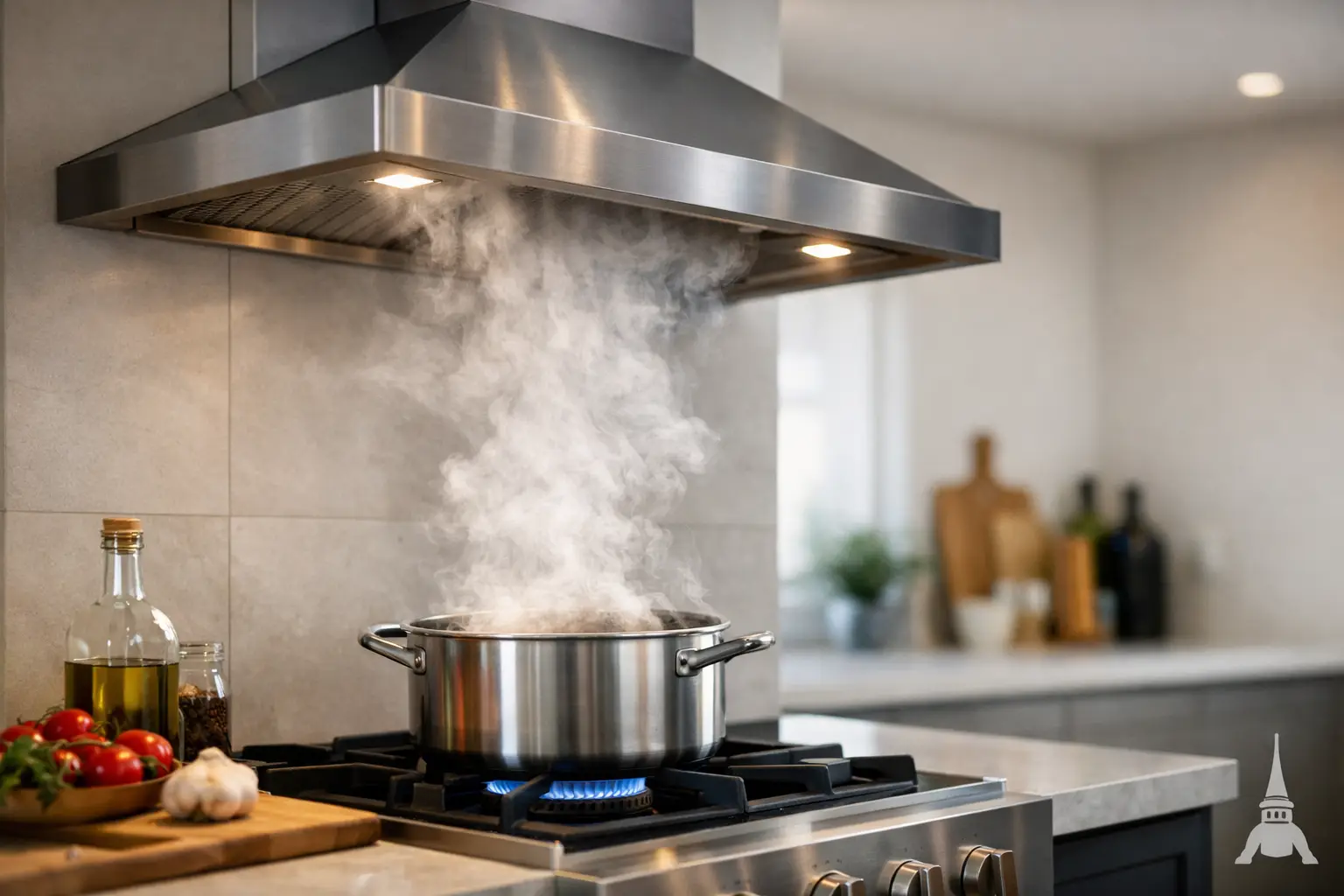
If you are fitting out a commercial kitchen, the question is not simply is kitchen ventilation required – it is what level of ventilation your site needs to operate safely, cleanly and in line with regulations. A small prep space, a full restaurant line, and a production kitchen all create very different heat, grease and airborne contaminants. Treating them the same is where expensive mistakes begin.
For most commercial kitchens, effective ventilation is not optional in any practical sense. Cooking produces heat, steam, grease, smoke and odours that need to be extracted and managed. If they are not, the kitchen becomes uncomfortable for staff, harder to clean, more likely to suffer grease build-up, and more exposed to fire risk and hygiene issues. In many cases, proper extraction is also tied directly to compliance with health and safety, fire safety and building requirements.
Is kitchen ventilation required for every kitchen?
Not every kitchen needs the same type of system, but any commercial kitchen where cooking creates fumes, vapours or excessive heat will need suitable ventilation. That can mean natural ventilation in very limited situations, but once you are dealing with fryers, grills, ovens, petrol appliances or sustained food production, mechanical extraction is usually the realistic answer.
This is where some operators get caught out. They assume that opening a window or fitting a domestic-style fan will satisfy the requirement. In a true commercial environment, that is rarely enough. The system needs to remove contaminated air at source, manage grease properly, and allow the kitchen to function consistently during busy service.
For sites in the UK, the exact requirement depends on the layout, cooking load, equipment type and local authority expectations. The law does not work as a one-line rule saying every kitchen must have one exact product. What it does require is a safe working environment and suitable control of airborne pollutants, heat and fire risk. In practice, that often leads to a commercial canopy and extraction system.
Why commercial kitchen ventilation matters
The first issue is staff welfare. A hot, smoky kitchen slows service, increases fatigue and creates an unpleasant environment for the people working in it. Good airflow helps maintain a usable temperature and reduces exposure to fumes and airborne grease.
The second issue is cleanliness and maintenance. Grease does not disappear when you cannot see it. It settles into ductwork, onto surfaces and around equipment. Over time that means harder cleaning, more wear on the site, and a greater chance of breakdowns and contamination.
Then there is fire safety. Grease-laden extract systems need proper design, filtration and cleaning access. A poorly planned system can become a hazard in its own right. That is one reason professional specification matters, especially in kitchens running high-fat or high-temperature cooking processes.
Finally, there is business continuity. Ventilation problems do not stay hidden for long. Staff complain, condensation builds up, odours spread into customer areas, and inspections become more difficult. Fixing a bad system after installation usually costs more than getting it right at the start.
What regulations make kitchen ventilation necessary?
When people ask is kitchen ventilation required, they are usually asking whether there is a legal duty behind it. In commercial settings, the answer is often yes, although the duty comes through a mix of regulations and guidance rather than a single sentence on its own.
Employers have responsibilities under health and safety law to provide a working environment with suitable ventilation. Building regulations can also apply where new works or major alterations are involved. Fire safety obligations matter as well, especially where grease extraction and duct routing are part of the design. Environmental health officers may also take an interest where fumes, odours or poor kitchen conditions affect hygiene or neighbouring premises.
That means compliance is not just about buying a canopy. The full system matters – hood size, extract rate, ductwork design, filtration, discharge point, make-up air and access for cleaning. A system that looks substantial but performs badly may still leave the operator exposed.
When natural ventilation is not enough
Natural ventilation has limits. It may help in a low-intensity area with minimal heat and no meaningful grease production, but it is not dependable for serious commercial cooking. Weather changes, airflow is inconsistent, and it does not capture contaminants at source.
In a busy kitchen, extraction needs to do a specific job. It must pull fumes and heat away from the cooking line before they spread across the room. That is why properly sized extraction canopies are positioned directly over the appliances creating the load. The canopy is not just a metal cover – it is the collection point that makes controlled extraction possible.
If the site also lacks enough replacement air, performance drops further. Extracting air without managing fresh air supply can create pressure issues, poor capture and an uncomfortable workspace. Good ventilation design looks at the whole airflow balance, not just the fan.
The answer depends on what you cook
A sandwich prep kitchen and a fish and chip shop do not need the same system. The cooking method changes everything.
Light-duty kitchens may mainly produce steam and moderate heat. Heavy-duty kitchens producing grease, smoke and constant high temperatures need stronger extraction, more effective filtration and tougher duct design. Petrol appliances add another consideration because combustion products need to be removed properly.
This is why off-the-shelf thinking can be risky. If the canopy is undersized, the fan is wrongly selected, or the duct route creates too much resistance, the system may look complete on paper and still fail in use. For operators, that means poor working conditions and the possibility of remedial works soon after opening.
Signs your kitchen ventilation is inadequate
You do not always need an inspection report to spot a ventilation problem. Kitchens with poor extraction usually show the same warning signs. The room feels excessively hot during service, grease builds up quickly on nearby surfaces, condensation appears where it should not, and odours linger beyond the kitchen area.
You may also notice staff opening doors for relief, complaints from front-of-house about drifting smells, or filters that clog unusually fast. In some cases, the fan is running but capture remains poor because the canopy design or air balance is wrong.
Those are not small operational annoyances. They are signals that the system is not controlling the load effectively.
Choosing the right commercial ventilation setup
A reliable kitchen ventilation system starts with the cooking equipment and the way the site operates. You need to know the appliance line-up, hours of use, likely grease output, available ceiling height, duct route and discharge options. Without that groundwork, the design is guesswork.
From there, the canopy should be sized for proper coverage, manufactured in durable materials and fitted with suitable filtration. Stainless steel remains the practical choice for commercial use because it stands up well to cleaning and heavy-duty conditions. The fan and ductwork then need to be matched to the real airflow demand, not simply selected on price.
This is also where custom fabrication has genuine value. Many sites have awkward footprints, structural limits or restricted service routes. A standard product may not fit properly or perform as required. A tailored system can solve those site-specific issues before they turn into delays and extra cost.
For buyers comparing suppliers, after-sales support matters too. Ventilation is not a decorative fit-out item. It is a working system that needs dependable build quality, proper installation and ongoing service access.
Is kitchen ventilation required in small commercial units?
Yes, very often. Smaller premises do not get a free pass simply because the footprint is tight. If the kitchen creates fumes, steam, heat or grease, suitable ventilation is still required. In fact, compact units can suffer more quickly from poor airflow because contaminants have less space to dissipate.
The challenge in smaller sites is usually fitting the right system into limited room. That is where precise design and custom-built canopies become especially useful. A compact kitchen still needs professional extraction if it is expected to operate reliably and meet its obligations.
Getting it right before problems start
The best time to answer the question is kitchen ventilation required is before equipment is ordered and duct routes are fixed. Ventilation should be part of the kitchen design from the beginning, not treated as an add-on once the main build is complete.
For commercial operators, the real issue is not whether airflow matters. It is whether the system is built for the actual demands of the site. When ventilation is properly designed, fabricated and installed, the kitchen runs cleaner, safer and with fewer interruptions. That is the standard worth aiming for, because a kitchen that can breathe properly is a kitchen that can work properly.
 Canopy
 Fans
Fans Stainless Steel Sheets
 ESP
ESP Cold room